
No products in the cart.


A Guide to the Fencing Calculator
If you are about to initiate a fencing project, one of the first steps you should take into account would be to figure out the dimensions and materials needed. Our team at Australian Treated Pine (ATPine) has developed a builder’s companion—the Fencing Calculator.
The purpose of this tool is to assist you in planning your work by converting your measurements into the number of materials needed to complete the project. As a result, we can provide you with everything you will need under one roof through our extensive range of products.
We have outlined our guide on calculating timber requirements for your next fencing project.
Before You Dig
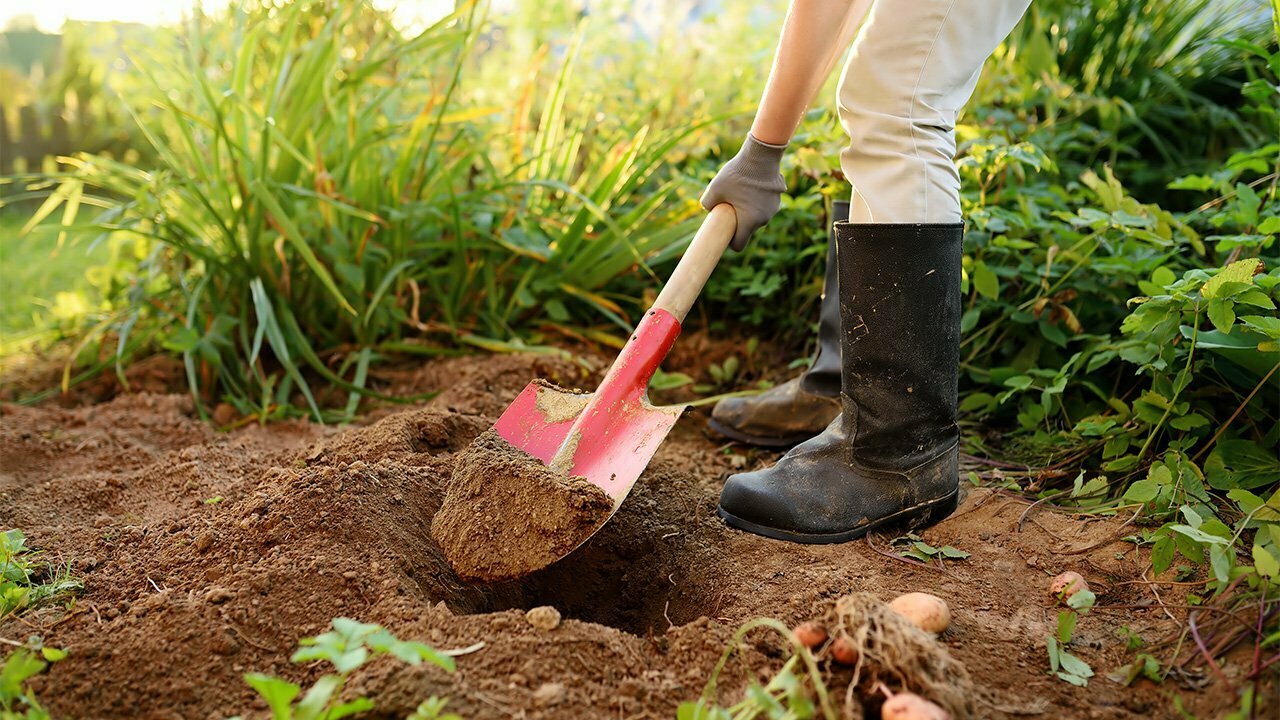
It is important to consult the appropriate authorities before beginning your fencing project to ensure that there are no water, gas, or electrical lines and pipes under the area to be worked on. You can contact Before You Dig at any time, submit an enquiry, and a referral will be made to members with assets in the surrounding area. Following this, you will receive an email from utilities and have access to plans and information for the site.
For more information on Before You Dig, please visit https://www.byda.com.au/.
Measure the Fence Length
The first information required for the ATPine Fencing Calculator is the length (in metres).
You can calculate the distance of the fence in a number of ways. A good and convenient way to do this is by marking the start and end points of the proposed fencing project and then using a measuring wheel or measuring tape to determine the total length in linear metres.
Alternatively, you can measure the fence line on Google Maps. If you enter the property’s address on Google Maps, you can determine the distance of the property boundary or existing fence. The benefit of this method is that it does not require you to be on-site and only requires a desktop computer or a smartphone to measure the distance. However, be aware that this method is less reliable than an in-person measurement.
Measuring Fence Height

The second information required for the ATPine Fence Calculator is the height (in metres), which you can select between 1.5m, 1.8m and 2.4m.
The height of a standard fence ranges between 1.5m and 1.8m. In Victoria, if the height exceeds two metres, you must obtain a permit before starting the project.
For more information about the requirements for your project, please consult your local council and be aware of state regulations.
ATPine’s Fencing Calculator
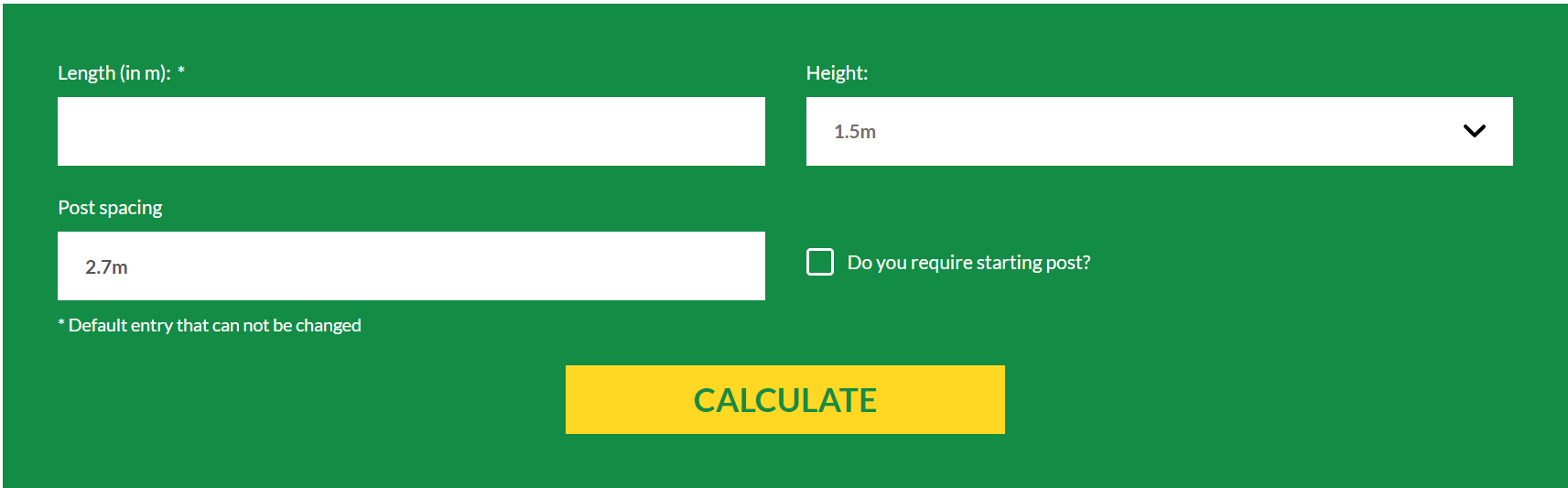
Once you have determined both the length (in metres) and the height (in metres) of your project, you can take advantage of the Fencing Calculator tool to receive an estimate on the quantity, size and length of the posts, rails, palings and plinth boards.
Calculating the Cost of Fencing Materials
Building a traditional timber fence requires the following materials: posts, rails, palings, and plinth boards. We provide some examples used by the ATPine Timber Fencing Calculator when choosing your materials:
Posts
For fences up to 1.8 metres high, the standard post spacing is 2.7 metres. The ATPine Fencing Calculator will divide the total fence length by 2.7m spacing to determine the quantity of materials that would be required for the job.
For example, a fence with a length of 30 metres and a height of 1.8 metres would mean that you need 12 125x75mm/2.4m posts.
Australian standards recommend that timber posts be treated to Hazard Level 4 (H4) or higher.
Rails
You would require three rails for a standard fence (1.8m). As a general rule, the top rail should be 75mm from the top of the post, the bottom rail should be 175mm above the plinth board, and the mid-rail should be in the centre between the two.
For example, a fence with a length of 30m, a height of 1.8m, and a post spacing of 2.7m would need 36 75x50mm/2.7m rails.
Australian standards require that timber rails be treated to Hazard Level 3 (H3) or higher.
Palings
The ATPine Fence Calculator can determine the quantity of each paling size by factoring in the gap left between each 150mm paling that a 100mm paling will cover. The gap between each 150mm paling will be 50mm and to cover that gap we need to use 100mm palings with 25mm overlap on each paling. So, for every one metre of fence, the consumer needs five palings for each.
According to Australian standards, timber palings must be treated to Hazard Level 3 (H3) or higher.
Plinth Board
The ATPine Fencing Calculator can determine the number of plinth boards by dividing the length of the fence (30m) by the post spacing (2.7m). Twelve 150x25mm/2.7m plinth boards are required based on these dimensions.
As per Australian standards, timber plinth boards must be treated to Hazard Level 3 (H3) or higher.
Additional Considerations
When planning your project, it is essential to consider the property’s contours, the type of soil present, environmental and element exposures, lifespan requirements, livestock, and your budget.
ATPine, the leading supplier of Australian Treated Pine in Melbourne, is a one-stop shop to provide all of your fencing needs. We offer a free to use Fencing Calculator for your convenience, so you can begin planning your project right away.
FAQs
How do I calculate how much fencing I need?
It has never been easier to estimate your fencing requirements with ATPine’s Fencing Calculator. This tool will calculate the quantity, size and length of the materials you would require for your project based on the length, height and post spacing you provide.
An important point to note is that this tool does not include hardware.
How do I calculate how many fence posts I need?
There is a standard spacing of 2.7 metres between posts for fences up to 1.8 metres in height. By dividing the total distance required by 2.7 metres, the ATPine Fencing Calculator determines how many posts are needed. This tool provides the option to include a starter post, which will be added to the total number if required.
How do I calculate the distance between fence posts?
The standard spacing between posts is 2.7 metres for a 1.8-metre-high fence. However, the spacing is determined by the height, soil quality, and the environment in which the fence is built. As the height increases, the spacing decreases.


Related Articles
5 Tips To Extend The Life Of Your Timber Fence
How To Clean Your Deck: A Step-By-Step Guide
Why You Should Buy Merbau Decking


